
This article contains affiliate links. As an Amazon Associate, I earn from qualifying purchases at no extra cost to you.
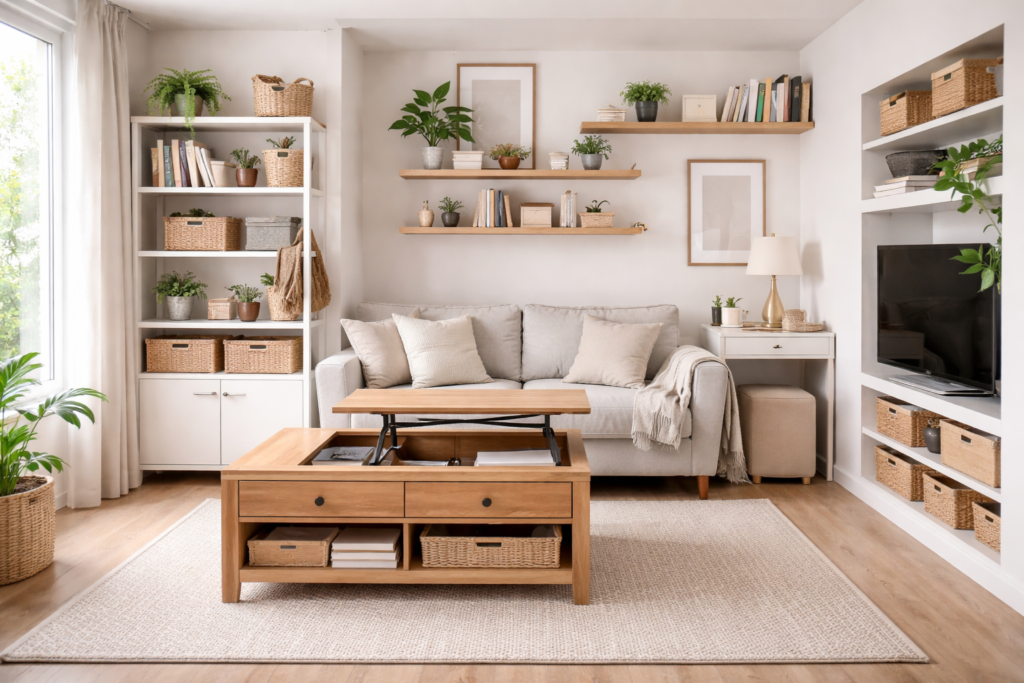
Small Spaces Don’t Have A Storage Problem, They Have A Strategy Problem
Most homes don’t lack space, they lack structure. Things pile up, drawers overflow, and rooms start feeling smaller than they actually are. The good news is that you don’t need more square footage to fix it.
This becomes much easier when your systems are aligned, especially when you understand why your home never stays organized and how to fix it.
What you need is the right storage approach.
The ideas below are practical solutions that help you use every inch of your home more efficiently without adding clutter or complexity.
Storage Solutions Comparison Table
| Storage Type | Best For | Space Saved | Ease Of Use | Cost Level |
|---|---|---|---|---|
| Under-Bed Storage | Bedrooms | High | Easy | Low |
| Vertical Shelving | Living Rooms / Offices | Very High | Medium | Medium |
| Storage Furniture | All Rooms | High | Easy | Medium |
| Door Organizers | Bathrooms / Closets | Medium | Very Easy | Low |
| Rolling Carts | Kitchens / Offices | Medium | Very Easy | Low |
1. Use Vertical Wall Space Instead Of Floor Space
Walls are often the most underused storage area in any home. When floor space is limited, going vertical is one of the fastest ways to create more room.
• Install floating shelves above desks, beds, and entryways
• Use tall shelving units instead of wide furniture
• Add hooks for items you use daily
If your home constantly feels tight, chances are you’re not using your walls effectively.
2. Choose Furniture That Doubles As Storage
Every piece of furniture should earn its place. In small spaces, function matters more than aesthetics alone.
• Storage ottomans for hidden compartments
• Beds with built-in drawers
• Coffee tables with lift tops or shelves
A smart upgrade like storage ottoman with hidden compartment helps reduce visible clutter while adding function to your space.
3. Maximize Under-Bed Storage
The space under your bed is one of the easiest ways to create storage without adding anything new to your room.
• Use low-profile bins
• Store seasonal clothing or extra bedding
• Keep rarely used items organized
Using under-bed storage containers makes this space far more efficient and easy to access.
4. Use Clear Containers To Avoid Overbuying
Storage only works if you can see what you have. Hidden clutter turns into forgotten clutter.
• Use transparent bins
• Group similar items
• Label when necessary
This also prevents duplicate purchases and wasted space.
5. Add Storage Behind Doors
Doors offer hidden storage that doesn’t take up any room.
• Over-the-door organizers
• Hooks for bags or robes
• Hanging racks for pantry items
Small changes like this can make a noticeable difference.
6. Divide Drawers Properly
Messy drawers waste space and create frustration.
• Use drawer dividers
• Separate items by category
• Avoid stacking loosely
If your drawers are chaotic, you’re not using them efficiently.
7. Use Baskets To Group Clutter
Loose items scattered around a room make it feel crowded even if there’s space.
• Use baskets for blankets or toys
• Keep them visible but controlled
• Stick to simple categories
This keeps your space looking clean without constant effort.
8. Optimize Your Closet With Structure
Closets often feel full because they’re not organized properly.
• Add extra shelving or rods
• Use slim hangers
• Store off-season items separately
For a deeper breakdown, check out how to organize your closet like a minimalist (without getting rid of everything).
9. Use Hidden Storage Whenever Possible
The best storage is the kind you don’t notice.
• Storage benches in entryways
• Beds with hidden compartments
• Seating with lift-up lids
This keeps your home clean without adding visual clutter.
10. Keep Frequently Used Items Accessible
Not everything should be stored away.
• Keep daily items within reach
• Store rarely used items higher
• Avoid mixing categories
This reduces friction in your routine.
11. Use Corner Spaces Efficiently
Corners are often wasted but can be turned into functional storage.
• Corner shelves
• L-shaped desks
• Corner cabinets
Even small adjustments can unlock unused space.
12. Store Items Based On Frequency Of Use
Where you place items matters just as much as how you store them.
• Daily items at eye level
• Weekly items mid-level
• Rarely used items higher up
This keeps your space practical and easy to maintain.
13. Use Stackable Storage Solutions
Stacking allows you to use vertical space without installing anything permanent.
• Stackable bins
• Tiered organizers
• Stackable drawers
This works especially well in tight spaces.
14. Simplify Your Storage Categories
Overcomplicated systems don’t last.
• Keep categories simple
• Avoid over-labeling
• Group similar items naturally
The easier it is to maintain, the longer it will last.
15. Use Multi-Purpose Storage In Living Areas
Living rooms tend to collect clutter quickly.
• Storage coffee tables
• TV stands with cabinets
• Decorative baskets
This keeps your space functional without looking messy.
16. Improve Kitchen Storage Flow
Kitchens can feel cramped even when they have enough space.
• Use vertical cabinet space
• Add shelf risers
• Store based on frequency
You can also explore kitchen storage ideas that make cooking faster and easier.
17. Use Under-Sink Storage Properly
Under-sink areas are often chaotic.
• Add pull-out organizers
• Use bins to separate items
• Avoid stacking randomly
This turns a messy space into a functional one.
18. Rotate Seasonal Items
Keeping everything accessible all year creates unnecessary clutter.
• Store seasonal clothes separately
• Rotate every few months
• Keep current items accessible
This keeps your space lighter and easier to manage.
19. Use Wall-Mounted Hooks Strategically
Hooks are simple but extremely effective.
• Entryways for bags
• Bathrooms for towels
• Kitchens for utensils
They reduce the need for bulky furniture.
20. Keep Surfaces As Clear As Possible
Cluttered surfaces make a space feel smaller instantly.
• Limit items on counters
• Store items immediately
• Use trays to group small items
Clear surfaces create the illusion of more space.
21. Use Rolling Storage Where Possible
Mobility adds flexibility.
• Rolling carts for kitchens or bathrooms
• Movable storage for small apartments
• Easy access without fixed placement
This is especially useful in tight layouts.
22. Store Items By Room Function
Mixing items from different rooms creates unnecessary clutter.
• Keep items where they’re used
• Avoid random storage
• Maintain clear boundaries
This simplifies organization long-term.
23. Reduce Visual Clutter
Too many visible items make a space feel crowded.
• Use closed storage
• Keep colors consistent
• Avoid overcrowding shelves
A cleaner look makes the space feel bigger.
24. Build A Simple Storage System
Without a system, clutter always comes back.
• Assign a place for every item
• Keep storage consistent
• Make it easy to maintain
If your system is complicated, it won’t last.
25. Reset Your Space Regularly
Storage only works if it’s maintained.
• Daily quick reset
• Weekly light declutter
• Monthly deeper reset
If you don’t have a system yet, follow the daily home reset routine that changes everything.
26. Declutter Before Adding Storage
Adding storage without decluttering just hides the problem.
• Remove unused items
• Keep only what you use
• Avoid organizing unnecessary clutter
If needed, follow how to declutter your home room by room.
27. Focus On Function Over Perfection
A perfect-looking space that doesn’t work is useless.
• Prioritize ease of use
• Keep systems simple
• Adjust based on your habits
The goal is not a perfect home. It’s a functional one.