
This article contains affiliate links. As an Amazon Associate, I earn from qualifying purchases at no extra cost to you.
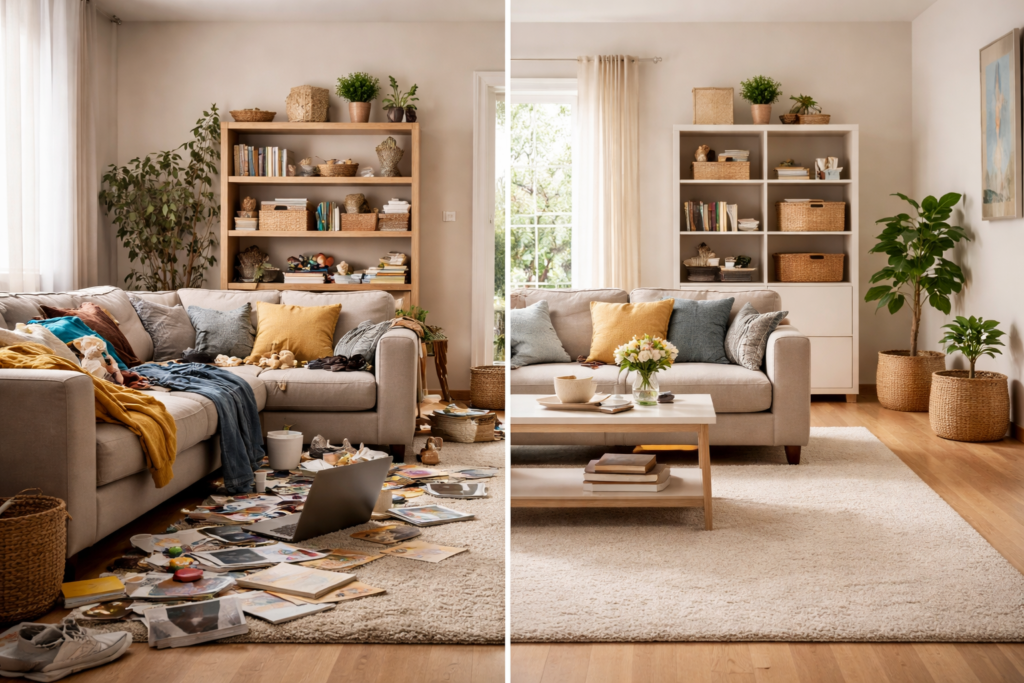
Why Decluttering Feels Overwhelming (And Why Most People Quit)
Decluttering sounds simple until you actually start. You look around, see too much stuff, and don’t know where to begin. That’s where most people get stuck.
The issue isn’t effort. It’s lack of structure.
Without a clear plan, people jump between rooms, start multiple areas, and never feel finished. This creates frustration and makes it harder to stay consistent. You end up with partially cleaned spaces and no real sense of progress.
A room-by-room approach solves this by giving you direction. Instead of trying to fix everything at once, you complete one space at a time and build momentum naturally.
Once you’ve cleared out unnecessary items, using smart storage solutions for small spaces can help you organize what’s left more effectively.
Why Decluttering Room By Room Works Better Than Anything Else
Trying to declutter your entire home at once almost always fails because it creates too much pressure. When everything feels urgent, nothing gets finished.
A room-by-room approach removes that pressure.
Instead of thinking about your entire home, you focus on a single space and complete it fully before moving on. This gives you a clear start and finish point, which makes the process feel manageable.
It also creates visible progress quickly. When one room is fully decluttered, it motivates you to continue instead of stopping halfway.
Over time, this builds momentum and turns what feels overwhelming into something structured and achievable.
What To Do Before You Start Decluttering
Preparation is what makes the process smooth instead of overwhelming.
Before you begin:
• Set a clear goal for each room
• Grab basic supplies (bags, bins, boxes)
• Decide how much time you’ll spend
• Remove distractions
Having tools ready helps you move faster. Using heavy-duty storage bins for decluttering makes it easier to sort items without creating extra mess.
Going in with a plan prevents hesitation and keeps you focused.
Room-By-Room Declutter Priority Table
| Room | Priority Level | Difficulty | Time Needed | Impact |
|---|---|---|---|---|
| Bedroom | High | Easy | Low | High |
| Kitchen | High | Medium | Medium | High |
| Living Room | Medium | Easy | Low | Medium |
| Bathroom | Medium | Easy | Low | Medium |
| Closet | High | Medium | Medium | High |
| Garage | Low | Hard | High | High |
The Simple Room-By-Room Decluttering System
The order matters more than people think. Starting with easier spaces builds confidence and makes it easier to handle more difficult areas later.
1. Start With The Bedroom
The bedroom gives you the fastest visible progress.
• Remove anything that doesn’t belong
• Clear nightstands and dressers
• Keep only daily essentials
A clean bedroom creates an immediate sense of control and reduces stress.
2. Move To The Closet
Closets hide clutter, which is why they feel overwhelming.
• Remove clothes you don’t wear
• Separate seasonal items
• Avoid “just in case” decisions
• Group similar items
Using closet storage organizer system helps maintain structure after decluttering so items don’t pile up again.
For a deeper system, follow how to organize your closet like a minimalist (without getting rid of everything)
3. Declutter The Bathroom
Bathrooms are quick to reset and build momentum.
• Throw away expired products
• Reduce duplicates
• Keep only essentials visible
• Organize by daily use
This space becomes easier to maintain almost instantly.
4. Tackle The Kitchen
The kitchen has high impact but requires more effort.
• Clear countertops completely
• Remove unused tools
• Organize cabinets by frequency
• Keep only what you use
Using stackable kitchen storage containers helps maintain order and prevents clutter from returning.
You can also follow how to declutter your kitchen (7 simple steps that actually work)
5. Reset The Living Room
This is one of the most visible spaces in your home.
• Remove items that don’t belong
• Limit decorative clutter
• Keep surfaces clean
• Store everyday items properly
A cleaner living room instantly makes your home feel more organized.
6. Organize Paper And Documents
Paper clutter builds quietly and becomes overwhelming fast.
• Sort important vs unnecessary
• Shred what you don’t need
• Store documents in one place
• Avoid random piles
This step reduces both physical and mental clutter.
7. Finish With The Garage Or Storage Areas
This is usually the hardest space, so leave it for last.
• Group similar items together
• Remove broken or unused items
• Create simple zones
• Avoid dumping items randomly
Take your time here. Progress matters more than speed.
How Long Each Room Should Take (Realistic Expectations)
One of the biggest mistakes people make is underestimating how long decluttering takes.
Here’s a realistic breakdown:
• Bedroom: 30–60 minutes
• Closet: 1–2 hours
• Bathroom: 20–30 minutes
• Kitchen: 1–2 hours
• Living room: 30–60 minutes
• Garage or storage: several hours or multiple sessions
Trying to rush through these steps usually leads to poor decisions or unfinished work.
It’s better to move at a steady pace and fully complete each room than to rush and leave things half done.
How To Decide What To Keep And What To Remove
This is where most people get stuck.
Use a simple decision filter:
• Have you used it in the last year
• Would you buy it again today
• Does it serve a clear purpose
• Is it adding value or just taking space
If the answer is no, it’s usually time to let it go.
Keeping things “just in case” is one of the biggest reasons clutter returns.
Making decisions is where most people get stuck, especially when items have emotional value or feel useful “just in case.”
A simple way to move forward is to focus on your current lifestyle instead of your past or imagined future.
Ask yourself:
• Does this support how I live today
• Would I notice if this disappeared
• Am I keeping this out of guilt or habit
When you shift your focus to what actually adds value now, decisions become much easier.
How To Avoid Getting Overwhelmed Midway
Even with a plan, it’s easy to lose momentum.
• Focus on one room at a time
• Set short time limits
• Avoid jumping between areas
• Accept imperfect progress
If you feel stuck, follow how to declutter when you feel overwhelmed
Common Decluttering Mistakes That Slow You Down
Avoiding these will save you time and frustration.
• Trying to do everything in one day
• Organizing before decluttering
• Keeping too many unnecessary items
• Not having a system afterward
Decluttering works best when you simplify first, then organize.
How To Keep Your Home Clutter-Free After Decluttering
Decluttering is only the first step. Maintenance is what keeps your home under control.
• Do a quick daily reset
• Avoid bringing in unnecessary items
• Keep storage systems simple
• Stay consistent
This works best when combined with the daily home reset routine that changes everything
When You Need A Faster Approach
If you don’t have time for a full process:
• Focus on high-impact areas
• Use short timed sessions
• Prioritize visible spaces
• Skip perfection
You can also follow how to declutter fast a simple step-by-step guide
How To Prevent Clutter From Coming Back
Decluttering once is helpful, but without a system, clutter always returns.
The key is not just removing items, but changing how things enter your home.
• Be more intentional with new purchases
• Avoid buying duplicates of what you already have
• Keep storage simple and easy to maintain
• Reset your space daily to stay in control
This is where simple habits matter more than effort. A small daily reset keeps everything from building up again.
The Real Goal Of Decluttering Your Home
Decluttering is not about having less. It’s about making your home easier to live in.
When each room has only what it needs, everything becomes easier. Cleaning takes less time, organizing becomes simpler, and your home feels calm and manageable.
That’s when your home starts working for you instead of against you.