
This article contains affiliate links. As an Amazon Associate, I earn from qualifying purchases at no extra cost to you.
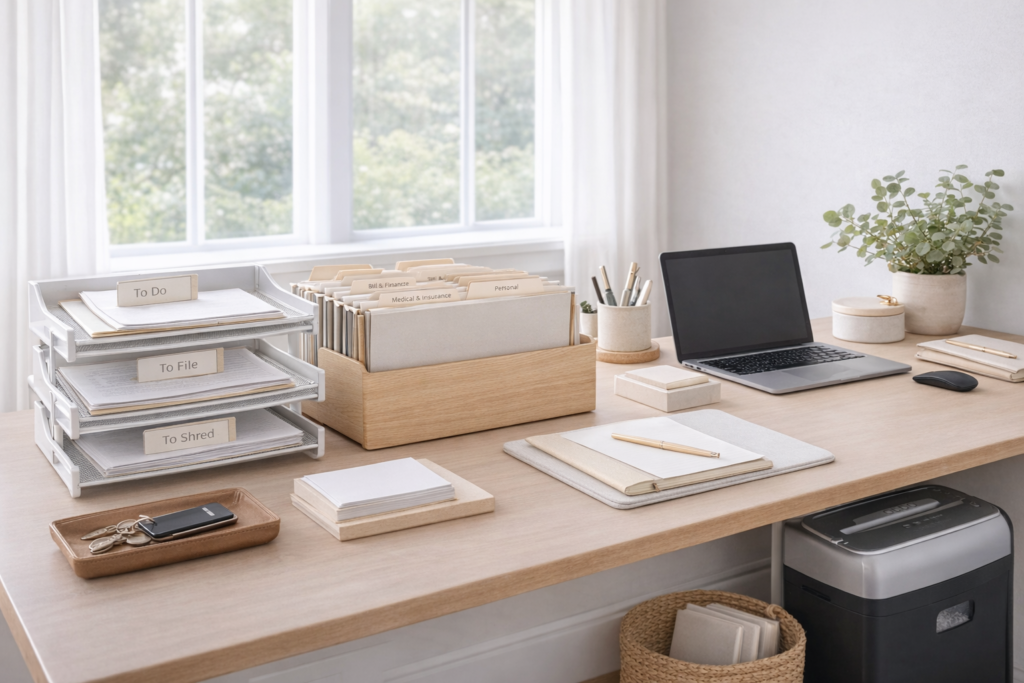
Paper clutter builds quietly but overwhelms quickly
Paper is one of the most deceptive types of clutter. It doesn’t take up much space at first, but over time it piles up in drawers, on counters, and in random folders until it becomes difficult to manage.
Bills, receipts, documents, notes, and mail all mix together, making it hard to find what you actually need when it matters most.
Decluttering paper is not about throwing everything away. It is about creating a simple system so you always know what to keep, what to remove, and where everything belongs.
Start by gathering all your paper in one place
Paper clutter often spreads across your entire home.
Check:
- Kitchen counters
- Desk drawers
- Mail piles
- Bags and folders
Bring everything into one spot. This step is important because it shows you the full volume of what you’re dealing with.
Most people underestimate how much paper they actually have until they see it all together.
Sort into clear, simple categories
Before you start deciding what to keep, create a few basic categories.
You don’t need anything complicated. Keep it simple:
- Important documents
- Action items
- Reference papers
- Trash
This structure makes decisions easier because you are not thinking about every paper individually. You are simply placing it into the right group.
Be ruthless with what you don’t need
A large portion of paper clutter is unnecessary.
Get rid of:
- Old receipts you don’t need
- Expired documents
- Junk mail
- Duplicate papers
If something does not serve a clear purpose, it should not stay.
This is where many people hesitate, but letting go is what creates space and clarity.
If you find it difficult to decide, The 15-Minute Declutter Method That Actually Works can help you move quickly without getting stuck.
Digitize what you can
One of the easiest ways to reduce paper clutter is to remove it entirely.
Scan or take photos of:
- Important receipts
- Documents you want to keep but don’t need physically
- Notes you may reference later
Digital storage reduces physical clutter while still keeping your information accessible.
Create a simple filing system
Once you’ve reduced your paper, create a basic system to store what remains.
You don’t need an elaborate setup. A few clearly labeled folders are enough.
Keep categories minimal so you can easily maintain them without overthinking.
The goal is to always know exactly where something goes without hesitation.
Control what comes into your home
Paper clutter often returns because of what continues to come in.
Reduce incoming clutter by:
- Unsubscribing from unnecessary mail
- Switching to digital billing
- Being mindful of what you bring home
This step is what prevents the problem from rebuilding over time.
Keep your main surfaces clear
Paper tends to land on the same surfaces repeatedly.
Counters, desks, and tables become temporary holding areas that quickly turn into clutter zones.
Make it a habit to process paper immediately instead of letting it sit. This keeps your space clean and prevents buildup.
For a full-home approach to keeping surfaces under control, How to Declutter Your Home Room by Room helps reinforce consistency in every space.
Build a simple weekly paper reset
Paper clutter is easiest to manage when handled regularly.
Set aside a few minutes each week to:
- Sort new papers
- File what needs to be kept
- Remove what you don’t need
This small habit keeps everything under control and prevents overwhelm from returning.
Less paper means more mental clarity
When paper clutter is reduced, your space feels lighter and more organized.
You no longer waste time searching for documents or dealing with piles that never seem to go away.
Instead, everything has a place, and your home feels more in control.