
This article contains affiliate links. As an Amazon Associate, I earn from qualifying purchases at no extra cost to you.
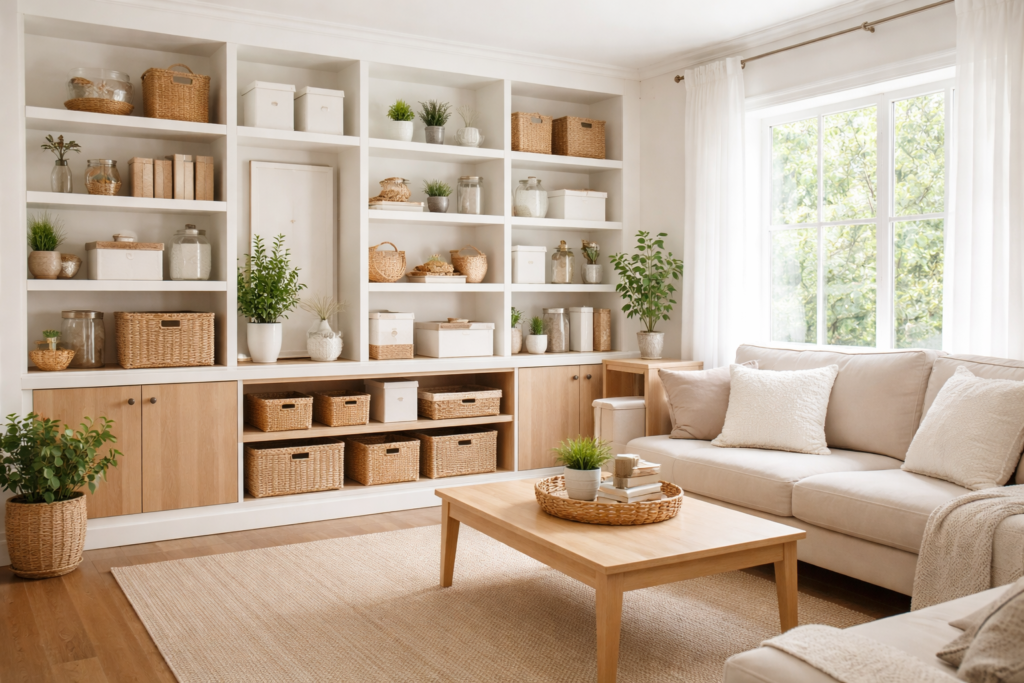
A simple approach to keep your home organized without constant effort
Most people think staying organized requires constant cleaning and effort.
It does not.
The real difference between a home that stays organized and one that does not comes down to one thing: systems.
When you have the right system in place, your home naturally stays in order without needing to constantly fix it.
If your space feels cluttered right now, start with how to declutter fast: a simple step-by-step guide before building your system.
What the one system rule means
The rule is simple:
Every item in your home should have a clear place, and that place should make sense for how you use it.
If something does not have a place, it becomes clutter.
If something is hard to put away, it will not stay organized.
Your system needs to work with your habits, not against them.
Make it easy to put things away
One of the biggest mistakes people make is creating systems that are too complicated.
If putting something away takes effort, you are less likely to do it.
Instead:
- keep storage simple
- make items easy to access
- avoid stacking or hiding things too deeply
Using storage bins & labels can make this much easier by clearly defining where items belong and removing guesswork.
Organize based on real life, not ideal habits
Your home should reflect how you actually live.
Ask yourself:
- where do I naturally use this item
- where would I instinctively look for it
Place items where they make the most sense for your routine.
This reduces friction and helps your system work automatically.
If your overall structure feels inconsistent, how to organize every room in your house will help you apply this across your entire home.
Reduce the number of decisions
A good system removes decisions, not adds more.
If you have too many categories or complicated setups, it becomes harder to maintain.
Keep things simple:
- fewer categories
- clear zones
- easy access
For smaller items, drawer organizers are a simple way to keep things separated without creating clutter.
Fix problem areas with better systems
Every home has areas that become messy faster than others.
Common problem areas include:
- entryways
- closets
- kitchen drawers
Instead of constantly cleaning these spaces, improve the system.
For example, using over-the-door organizers can instantly create more storage without taking up additional space.
This solves the problem at the source instead of repeatedly dealing with it.
Make your system visible
Hidden systems often fail because they are easy to ignore.
When possible:
- keep things visible
- use clear containers
- label where needed
Visibility makes it easier to follow your system without thinking about it.
Build habits that support your system
Even the best system needs simple habits to stay effective.
A few habits make a big difference:
- return items after using them
- avoid overfilling spaces
- reset small areas regularly
If you want a simple routine, the 15-minute declutter method that actually works is one of the easiest ways to stay consistent.
Focus on consistency, not perfection
Your home does not need to be perfect.
It needs to work.
A system that is easy to follow consistently will always outperform one that looks perfect but is hard to maintain.
One system changes everything
When every item has a place and your system fits your routine:
- clutter builds up slower
- cleaning becomes easier
- your home feels more under control
You do not need dozens of systems.
You need one system that works.