
This article contains affiliate links. As an Amazon Associate, I earn from qualifying purchases at no extra cost to you.
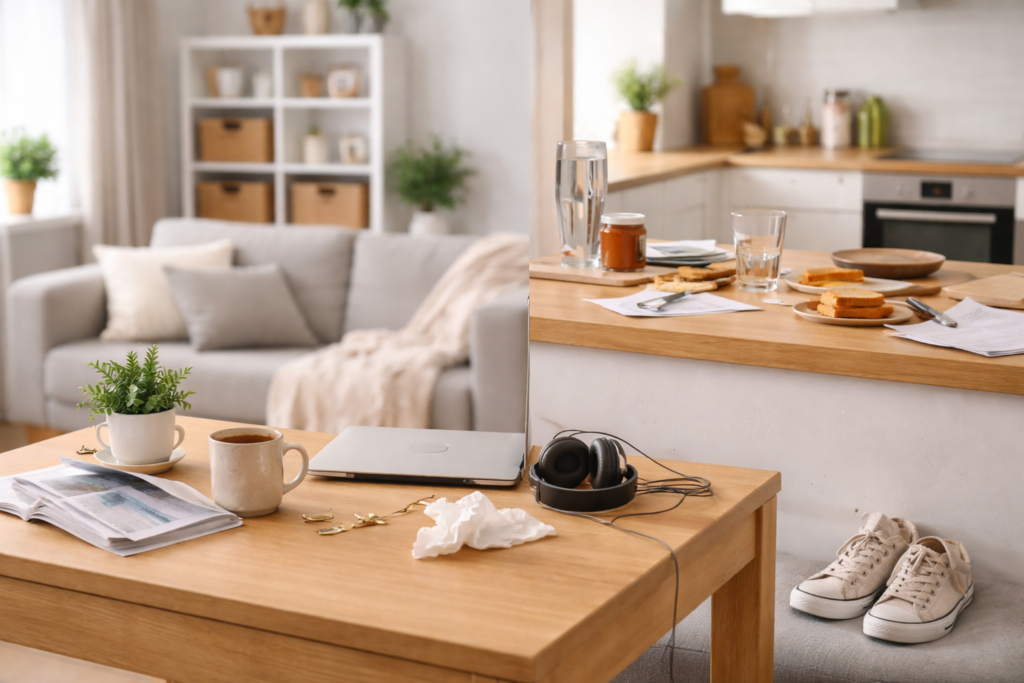
A messy home doesn’t usually come from one big problem. It comes from small habits that repeat throughout the day without you noticing.
You put something down instead of away. You delay a quick task. You tell yourself you’ll deal with it later. None of these feel like a big deal in the moment, but together they create constant clutter.
That’s why it can feel like your home never stays clean, no matter how often you reset it.
Once you identify these hidden habits, you can fix them at the source and stop the cycle before it starts.
Using storage ideas for small spaces that actually work can help you prevent clutter from building up in the first place.
You Leave Things “For Now” Instead of Finishing the Task
This is one of the biggest clutter habits. You set something down temporarily with the intention of coming back to it, but most of the time, you don’t.
These small delays quickly build into visible mess.
• Put Items Away Immediately Instead Of Setting Them Down
• Finish Small Tasks While You’re Already Doing Them
• Avoid Creating “Temporary” Spots That Become Permanent
This pattern is closely connected to why cleaning never feels enough and what actually works instead.
You Don’t Have a Clear Place for Everything
When items don’t have a designated spot, your brain defaults to convenience. That’s when things start piling up in random places.
Clutter isn’t always about having too much. It’s often about not having a clear system.
• Assign A Specific Place For Frequently Used Items
• Keep Storage Simple And Easy To Access
• Use clear drawer organizers set for home storage To Keep Things Structured
If your home constantly feels disorganized, this ties directly into the one-system rule for a perfectly organized home.
You Rely on Motivation Instead of Routine
Waiting until you feel motivated to clean or organize is one of the fastest ways to fall behind. Motivation comes and goes, but clutter builds daily.
The solution is to remove the need for motivation entirely.
• Build Simple Habits That Happen Automatically
• Reduce Decisions By Creating Default Systems
• Stick To Small Daily Actions Instead Of Big Efforts
This works especially well when combined with the daily home reset routine that changes everything.
You Keep Too Many “Just in Case” Items
Holding onto things you might need someday creates slow, steady clutter. These items usually sit unused while taking up valuable space.
Over time, they make your home harder to manage.
• Keep Only What You Actually Use Regularly
• Limit Backup Items To A Small, Defined Space
• Let Go Of Items Without A Clear Purpose
If this is a recurring habit, it connects strongly with why you keep re-cluttering your home and how to break the cycle.
Your Surfaces Are Always Available
Flat surfaces invite clutter. The more open space you have, the easier it is to drop things without thinking.
Once one item lands, more follow.
• Keep Surfaces Minimal And Intentional
• Use stackable storage bins for home organization To Contain Loose Items
• Reset Surfaces Daily To Prevent Build-Up
This is closely related to clutter triggers you don’t notice and how to fix them.
You Don’t Reset Your Home Daily
Without small resets, clutter builds quietly throughout the day. By the time you notice it, everything feels overwhelming again.
Short resets keep things under control without requiring a full cleanup.
• Spend A Few Minutes Resetting Each Area Daily
• Focus On High-Traffic Areas First
• Keep Resets Quick And Consistent
For a simple structure, this pairs well with the 10-minute reset habit that keeps your home clean.
Your Storage Is Too Complicated
If putting something away takes too many steps, you’re less likely to do it consistently. Over time, that creates clutter even in well-organized homes.
The easier your system is, the more it works.
• Keep Storage Simple And Accessible
• Avoid Overcomplicated Systems
• Use multi-purpose home storage containers with lids To Reduce Visual Clutter
This is often part of a larger issue explained in why your home gets messy so fast and how to stop it for good.
A messy home isn’t the result of one big mistake. It’s the result of small habits repeating over time.
When you fix those habits, everything changes. Your home stays cleaner without constant effort, and maintaining it becomes much easier.